
A strong core is about much more than flat abs or visible muscle definition. Your core muscles play a crucial role in almost every movement your body makes, from standing and walking to lifting, bending, and even sitting. A weak core can lead to poor posture, back pain, reduced balance, and a higher risk of injury, while a strong core supports overall strength, stability, and confidence in daily life.
Many people assume that building a strong core requires expensive gym equipment or complicated workout routines. In reality, some of the most effective core exercises are simple, require little to no equipment, and can be done at home. The key lies in proper form, consistency, and understanding how each movement engages your muscles.
In this article, we’ll explore 5 simple exercises for a strong core, explain why they work, and show you how to perform them correctly. Whether you’re a beginner or someone looking to strengthen your foundation, these exercises can help you build a powerful and stable core over time.
Easy At-Home Exercises for Beginners
What Is the Core and Why Is It Important?
Before diving into the exercises, it’s important to understand what the core actually is. The core is not just the abdominal muscles you see in the mirror. It includes a group of muscles that stabilize and support your spine and pelvis.
Major Core Muscles Include:
- Rectus abdominis (front abs)
- Transverse abdominis (deep stabilizing muscle)
- Obliques (side abs)
- Lower back muscles
- Pelvic floor muscles
- Glutes and hip muscles
Together, these muscles act as a natural corset for your body. A strong core improves posture, enhances athletic performance, protects your spine, and makes everyday movements easier and safer.
Exercise 1: Plank
Why the Plank Is Effective
The plank is one of the most powerful core exercises because it engages multiple muscle groups at once. It strengthens the deep core muscles while also working the shoulders, arms, back, and glutes.
How to Perform a Plank
- Start in a push-up position with your forearms on the floor
- Keep your elbows directly under your shoulders
- Extend your legs straight back, resting on your toes
- Keep your body in a straight line from head to heels
- Tighten your core and squeeze your glutes
- Hold the position while breathing steadily
Common Mistakes to Avoid
- Letting your hips sag or rise too high
- Holding your breath
- Arching your lower back
Benefits
- Builds core stability
- Improves posture
- Strengthens the lower back
- Reduces risk of injury
Start with 20–30 seconds and gradually increase your time as your strength improves.
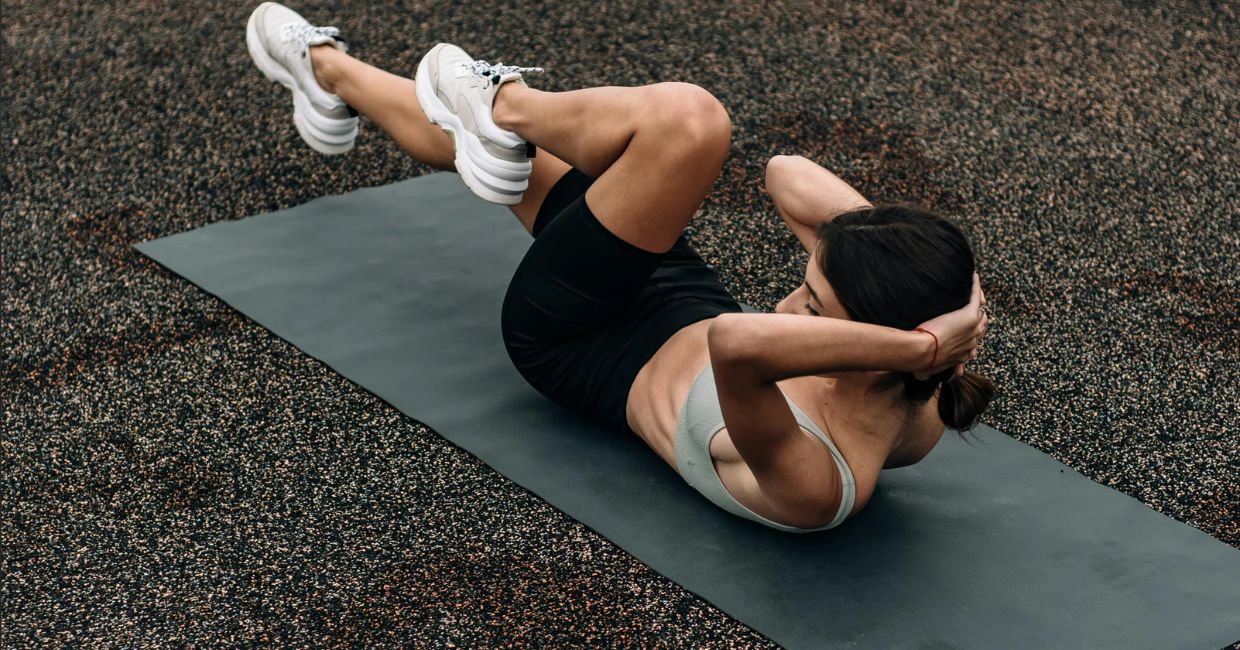
Exercise 2: Bicycle Crunches
Why Bicycle Crunches Work
Bicycle crunches are excellent for targeting the rectus abdominis and obliques simultaneously. They also improve coordination and rotational strength.
How to Perform Bicycle Crunches
- Lie flat on your back with hands behind your head
- Lift your shoulders slightly off the floor
- Bring your right elbow toward your left knee
- Extend your right leg while twisting your torso
- Switch sides in a smooth, controlled motion
Tips for Best Results
- Keep movements slow and controlled
- Avoid pulling on your neck
- Focus on twisting from the torso
Benefits
- Strengthens abs and obliques
- Improves core definition
- Enhances coordination
Aim for 10–15 repetitions per side, maintaining proper form throughout.
Exercise 3: Dead Bug
Why the Dead Bug Is Great for Beginners
The dead bug exercise is simple yet highly effective for strengthening deep core muscles. It emphasizes control and stability rather than speed.
How to Perform the Dead Bug
- Lie on your back with arms extended toward the ceiling
- Bend your knees at 90 degrees
- Slowly lower your right arm and left leg toward the floor
- Keep your lower back pressed into the ground
- Return to the starting position and switch sides
Key Points to Remember
- Move slowly
- Keep your core engaged
- Avoid arching your lower back
Benefits
- Activates deep core muscles
- Improves stability and balance
- Reduces lower back strain
This exercise is especially helpful for people recovering from back issues or those new to core training.
Exercise 4: Russian Twists
Why Russian Twists Are Effective
Russian twists strengthen the obliques and improve rotational strength, which is important for daily activities and sports.
How to Perform Russian Twists
- Sit on the floor with knees bent
- Lean back slightly while keeping your chest lifted
- Lift your feet slightly off the floor (optional for beginners)
- Twist your torso to the right, then to the left
- Keep your movements controlled
Beginner Modification
Keep your feet on the floor if lifting them feels too challenging.
Benefits
- Strengthens obliques
- Improves rotational control
- Enhances balance
Start with 12–20 twists total, increasing as your strength improves.
Exercise 5: Glute Bridge
Why the Glute Bridge Matters for Core Strength
Although often seen as a lower-body exercise, the glute bridge strongly activates the core and lower back muscles.
How to Perform a Glute Bridge
- Lie on your back with knees bent and feet flat on the floor
- Place your arms by your sides
- Press through your heels and lift your hips upward
- Squeeze your glutes at the top
- Lower slowly and repeat
Common Mistakes
- Overarching the lower back
- Pushing through the toes instead of heels
Benefits
- Strengthens glutes and lower back
- Supports spinal stability
- Improves posture
Perform 12–15 repetitions with controlled movement.
How Often Should You Train Your Core?
You don’t need to train your core every day to see results. For most people, 2–4 sessions per week are enough to build strength without overtraining. Quality matters more than quantity.
Sample Beginner Routine:
- Plank – 30 seconds
- Bicycle Crunches – 12 reps per side
- Dead Bug – 10 reps per side
- Russian Twists – 15 twists
- Glute Bridge – 15 reps
Repeat the circuit 2–3 times.
The Importance of Proper Form
Proper form is essential for effective core training. Poor technique can reduce results and increase the risk of injury. Focus on slow, controlled movements and engaging your core muscles throughout each exercise.
If an exercise feels too difficult, modify it rather than pushing through poor form. Progress comes from consistency, not rushing.
Lifestyle Habits That Support a Strong Core
Exercise alone isn’t enough. Supporting your core strength through daily habits can make a big difference.
Helpful Habits:
- Maintain good posture while sitting and standing
- Take breaks from long periods of sitting
- Stay hydrated
- Eat a balanced diet with enough protein
- Get adequate sleep
A strong core is built not only through workouts but also through mindful daily movement.
Final Thoughts
Building a strong core doesn’t require complicated routines or fancy equipment. With just a few simple exercises and consistent effort, you can improve your strength, posture, and overall fitness. The five exercises discussed in this article target all major core muscles and can be adapted for any fitness level.
Remember, progress takes time. Focus on proper form, listen to your body, and stay consistent. Over time, these simple exercises can lead to a stronger, more stable core that supports your health and daily life.